

On 3–6 December 2025, researchers of the Institute of Telecommunications and Global Information Space of the National Academy of Sciences of Ukraine (ITGIS NAS of Ukraine) participated in the XXV International Scientific Conference on Earth & Planetary Sciences SGEM 2025, held in Vienna, Austria.
SGEM Vienna Green 2025, hosted at Schönbrunn Palace, was more than a scientific event. It served as a dynamic platform where environmental sciences, green technologies, social responsibility, and artistic expression converged within a shared European cultural space.
Victoria I. Klymenko, PhD in Engineering, Scientific Secretary and Senior Researcher at ITGIS NAS of Ukraine, presented a research report entitled:
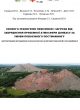
“Hexagon-Based GIS and Remote Sensing for Forest Ecosystem Monitoring and Anomaly Detection.”
The study was conducted by researchers of ITGIS NAS of Ukraine. The authors of the publication include:
Oleksandr M. Trofymchuk, Director of ITGIS NAS of Ukraine, Corresponding Member of NAS of Ukraine, Professor;
Victoria I. Klymenko, PhD, Senior Researcher;
Viacheslav Y. Vyshniakov, PhD, Senior Researcher;
Nataliia A. Sheviakina, PhD, Senior Researcher.
Consultations were also conducted with specialists, including representatives of the Command of the Unmanned Systems Forces of the Armed Forces of Ukraine. In particular, PhD Vasyl Dolynnyi contributed as a co-author of the research.
The conference lasted four full academic days and included oral and poster sessions, seminars, and professional discussions. Scientific contributions were presented by researchers from numerous countries worldwide. A distinctive feature of SGEM Vienna Green 2025 was its intensive seminar program, comprising more than ten specialized workshops addressing:
Sustainable technologies and applied environmental methods
Research methodologies and interdisciplinary approaches
Science–policy dialogue and real-world implementation
Education, innovation, and future-oriented eco-friendly solutions
In line with SGEM’s philosophy of integrating science and culture, the program extended beyond academic sessions and included:
Scientific and art exhibitions exploring sustainability through visual and conceptual perspectives
Live artistic performances addressing environmental and social issues
A unique atmosphere where research, creativity, and human expression coexisted naturally
This integration reinforced SGEM Vienna Green’s identity not only as a scientific conference but also as a cultural and intellectual event uniting researchers, artists, and young leaders from various countries.
Ukraine was also represented by Lidiia Klymenko, a student of Kyiv Lyceum No. 157, L. Venediktov Children’s School of Arts No. 5, and Dream School of Performing Arts. Her participation exemplified the active civic position of Ukrainian youth at the international level.
Through her artistic performance, Lidiia presented Ukrainian culture on the international stage, demonstrating authentic national creativity in a contemporary interpretation. Her performance promoted Ukrainian traditions, spiritual values, and cultural heritage, contributing to cultural diplomacy and strengthening Ukraine’s positive image abroad.
Delegates from the following countries participated in the conference: Ukraine, Albania, Algeria, Austria, Bulgaria, Croatia, Czech Republic, Estonia, Finland, Georgia, Germany, Greece, Iran, Italy, Latvia, Libya, Moldova, Norway, Poland, Portugal, Romania, Slovakia, Sweden, Switzerland, Türkiye, and South Africa.
SGEM conference proceedings are indexed in major international scientific databases, including Web of Science, Scopus, EBSCO, and ProQuest.
The Scientific Committee of the Earth & Planetary Sciences (EPS) sector of the International Multidisciplinary Scientific GeoConference SGEM consists of 28 members — professors and invited academics from universities worldwide. Since 2020, Professor Oleksandr M. Trofymchuk has served as a member of this Scientific Committee and is currently the only representative of the Ukrainian scientific community in the field of Earth and Planetary Sciences within this body.
Researchers of ITGIS NAS of Ukraine have been regularly presenting their environmental research results at the SGEM International Multidisciplinary Scientific GeoConference twice annually since 2019.
The publication presented at the Extended Sessions Vienna Green “Green Science for Green Life” focuses on a hexagon-based geospatial navigation approach for monitoring forest ecosystems and detecting anomalous changes in Ukraine, where forest resources are subjected to significant anthropogenic and military pressures.
Using Sentinel-2 satellite imagery, vegetation indices were processed to classify vegetation dynamics and identify areas of significant degradation. To improve spatial accuracy, reduce edge effects, and enable quantitative assessment of forest cover changes, a hexagonal spatial partitioning method was applied.
Zhytomyr region — one of the most forested and environmentally sensitive regions of Ukraine — served as the pilot study area. The analysis identified over 40,000 forest-cover anomaly cases, with the highest intensity recorded in the Ovruch district.
The integration of remote sensing and GIS provides a powerful tool for environmental monitoring, particularly under conditions of restricted field access due to military actions. Beyond methodological advancements, the research highlights critical environmental consequences: forest degradation caused by illegal logging, fires, and war-related destruction undermines biodiversity conservation, carbon sequestration capacity, and water regulation functions.
The proposed approach supports the UN Sustainable Development Goals (SDG 13 – Climate Action and SDG 15 – Life on Land) by enabling evidence-based forest management decisions, prioritizing restoration measures, and enhancing ecosystem resilience.
The results confirm the effectiveness of combining GIS technologies, remote sensing, and hexagonal spatial models for sustainable forest management and post-war environmental recovery.