


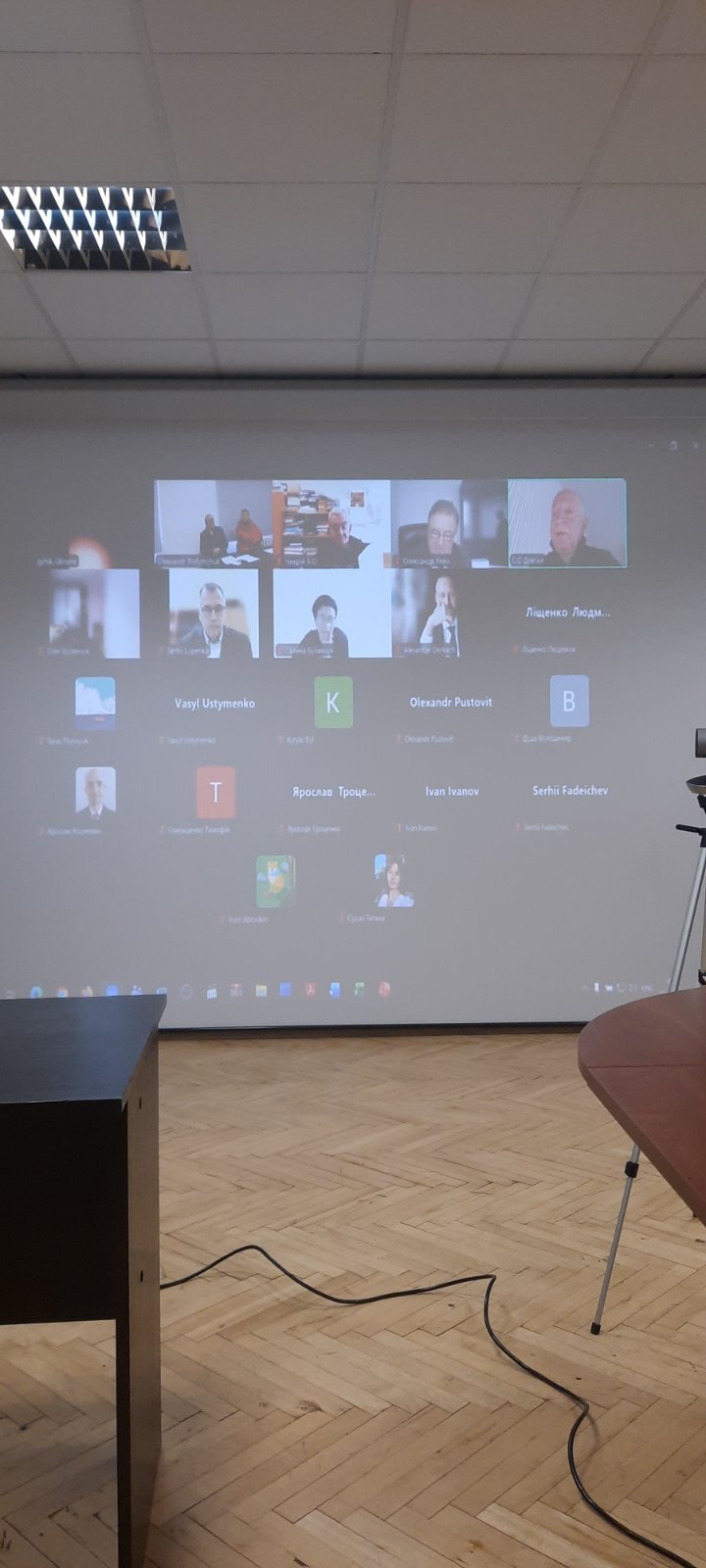
On 12–13 November 2026, the Institute of Telecommunications and Global Information Space of the NAS of Ukraine hosted the XXV International Scientific and Practical Conference “Information and Communication Technologies and Sustainable Development”, dedicated to the 25th anniversary of the Institute.
A total of 203 participants registered for the conference, and 42 of them presented reports.
The aim of the conference was to exchange experience and coordinate research and practical activities on developing and implementing modern information technologies for decision support in meeting defence needs, ensuring the environmental safety of regions and making efficient use of their renewable natural resources.
Conference sections
- Telecommunication systems
- Intelligent technologies and sustainable development
- Information technologies and mathematical modelling
- Geoinformation systems and remote sensing of the Earth
Participants
The conference brought together researchers from:
- V. M. Glushkov Institute of Cybernetics of the NAS of Ukraine;
- Scientific Centre for Aerospace Research of the Earth, Institute of Geological Sciences of the NAS of Ukraine;
- Taras Shevchenko National University of Kyiv;
- National Aerospace University “Kharkiv Aviation Institute”;
- Kyiv National University of Construction and Architecture;
- State University of Information and Communication Technologies;
- National University of Kyiv-Mohyla Academy;
- Vinnytsia National Technical University;
- National Centre “Junior Academy of Sciences of Ukraine”;
- University of London (Royal Holloway), United Kingdom;
- Kielce University of Technology (Politechnika Świętokrzyska), Poland;
- Opole University of Technology, Poland;
- Università di Roma-2 “Tor Vergata”, Italy.
Welcoming addresses were delivered by the Honorary Director of the Institute, Academician of the NAS of Ukraine Stanislav Oleksiiovych Dovhyi, and by Serhii Anatoliiovych Lupenko, Doctor of Technical Sciences, Professor at Opole University of Technology (Poland).
Reports
The plenary reports covered supercomputer technologies, mathematical methods of control and decision-making, modelling of complex systems, accounting for uncertainty in the analysis of Earth remote sensing data, cryptographic information protection and the assessment of marine and coastal ecosystems.
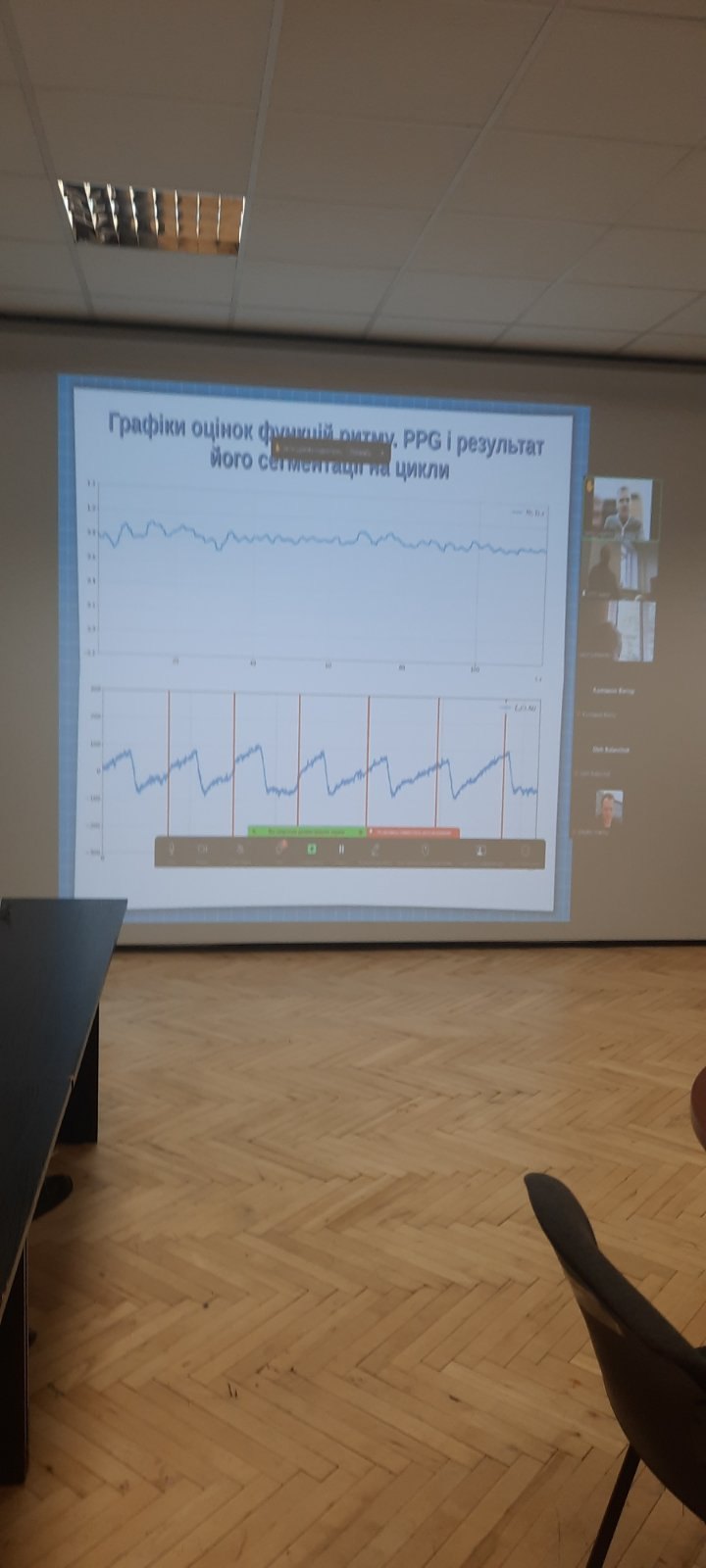
After the plenary session, participants presented research in applied mathematics, computational methods and information technologies. The reports addressed the solution of hypersingular integral equations, the use of discrete vortex models to describe fluid motion and the modelling of acoustic wave diffraction. Several presentations dealt with filtering radar images under mixed noise, text data analysis and the classification of information waves in open sources. Participants also discussed biometric authentication based on ECG signals, medical data transmission in telemedicine systems and the risk assessment of generative artificial intelligence systems.
A significant share of the reports on 13 November focused on the environmental consequences of hostilities. Participants presented studies on satellite monitoring of nature reserve areas, assessment of soil contamination and vegetation cover changes, and cartographic modelling of ecosystem changes after the destruction of the Oskil hydroelectric complex dam. The use of hydrogeological modelling to justify a network of backup water supply for the population of the Kyiv agglomeration was considered separately.
Reports on territorial recovery covered the use of geospatial models for planning work in de-occupied territories, matching three-dimensional building models and taking the state of ecosystems into account during recovery. The topic of sustainable development was complemented by presentations on forecasting grain crop yields under climate change and geoinformation analysis of the spread of the Danube plume.

Conference resolution
To achieve the aim of the conference, the participants proposed:
- to recommend that research institutions and higher education institutions develop joint research in supercomputer technologies, numerical methods, mathematical modelling of complex systems, control theory and decision-making under uncertainty;
- to recommend that environmental monitoring institutions combine Earth remote sensing data, geoinformation analysis, and field and laboratory studies to assess marine, coastal and nature reserve areas, detect soil contamination and assess ecosystem changes caused by the destruction of hydraulic structures;
- to propose that research institutions, local governments and water supply companies use geospatial data and three-dimensional building models when assessing damage and setting priority recovery measures for de-occupied territories;
- to recommend that the Institute and its partner institutions develop proposals for joint research projects on environmental monitoring under climate change and information support for territorial recovery, and involve PhD students and early-career researchers in preparing and carrying out such projects.
Based on the conference materials, the collective monograph “Information and Communication Technologies for Victory and Recovery” (PDF, in Ukrainian) has been published. Monographs and proceedings of previous conferences are available on the Collections of Scientific Papers page.